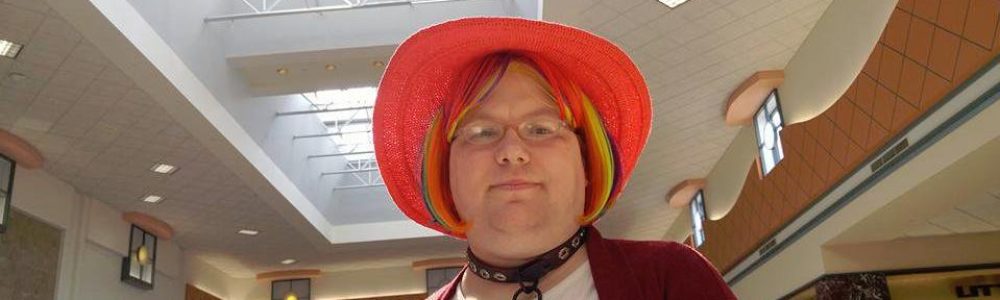
So, you want to go to WisCon?

I’ve been tagging people on Twitter telling them they should come to WisCon next year. I’m also planning a big event for Tales of MU readers at WisCon 41, and while I  know a lot of readers who already attend the con, this may well tempt some new folks to come out for the first time.

Left to my own devices, I would have been too nervous and anxious and insecure to navigate actually coming to the con and participating on my own. It took people all but dragging me there and promising to hold my hand to get me there. I know how daunting it can be!

Here’s what you need to know.

WisCon is an annual convention every Memorial Day weekend in Madison, Wisconsin. It is more of a literary and academic convention than a media/entertainment convention. That is, we don’t bring in big screen celebrities or have big industry events. There are usually a few launch parties for books, particularly indie/small press ones and the like, though.

If you read fantasy and science fiction, you will see names you recognize from books on name tags, but the people wearing them are there as members of the convention, exactly the same as you. Respect their boundaries as you would have others respect yours, but by all means, say hi! There are no handlers, no velvet ropes, no appearance fees or signing fees.

WisCon is run by a committee of members, staffed by member volunteers, and runs program items (panel discussions, readings) with members. And to be clear: if you register and show up, you are a member. There are not secret special categories of members who are “allowed” to do things.

Over 90% of the con events are held within the official con hotel, the beautiful Madison Concourse Hotel in beautiful downtown Madison. Some readings are at a coffee shop just down the street; traditionally there is a reception for the guests of honor at a nearby bookstore the night before the con officially opens. If you’re able to stay at the Concourse, this makes travel logistics and navigation is very easy. You don’t have to worry about getting lost or stranded somewhere in a strange city.

If you fly in, even getting from the airport to the hotel is easy-peasy. There is a board by the baggage claim in the Madison airport with a courtesy phone and pictures of all the hotels. Each hotel has a two digit extension. Just pick up the phone and dial and you will be connected to the hotel’s courtesy shuttle and/or front desk. Simply say the words, “I have a party of [number of people] at the airport for pickup.” and you will be told what the wait is. Then follow the signs to the bus shelter looking thing outdoors and wait. That’s it!

The convention bills itself as a feminist science fiction convention. It is increasingly a place that works to make everyone feel welcome, and I believe this shows in the number of people of color, trans and non-binary and otherwise visibly queer people, and people with disabilities (visible and not) who are comfortable hanging out and who express feeling not merely ~*tolerated*~ but welcomed.

Most conversations I’ve had in recent years about people feeling like they don’t belong have revolved more around impostor syndrome or the feeling that everybody else in the room is there because they did something amazing and noteworthy while the speaker is “merely” a reader or fan or someone who is struggling to create something… and honestly, such conversations tend to reveal that most of the people there feel or have felt the same way.

WisCon makes ongoing and evolving efforts to improve accessibility to con spaces, resources, and discussions to those with disabilities. This includes measures to avoid hallway congestion, reserving seats up front for those with sensory issues, having spaces for wheelchairs in panel rooms with reserved chairs nearby to keep their parties together, captioning services, etc. I can’t say there’s no room for improvement, but in this area as in many others, WisCon’s hallmark is its responsiveness.

WisCon has both a Statement of Principles and a Code of Conduct for members. The formulation and application of these texts have had a huge effect on making the con a safer, warmer, and more welcoming place. WisCon’s safety team walks the con regularly in highly visible yellow vests. My experiences with them have always shown them to be sensitive, discreet, and responsive.

The term “safety” over “security” is, as far as I know, a very deliberate choice, and one that they reflect in their conduct. When I got egged by a passing car at the con one year (this happened outside the hotel, obviously, and I am quite certain no one connected to the con was inside the vehicle), there was not a single thing a security guard could have done about that, but a member of the safety team sat with me until I felt… safe.

This year, a member of the safety team gently reminded me that not everyone was in on the joke with my satirical live tweets, and we agreed I should put up a little note. It was a very friendly conversation, not the least bit confrontational. The safety team is not a security force. They do act to enforce the code of conduct as needed, but they’re not the cops. There are members of the safety team who are visibly disabled, visibly queer, people of color. Young. Old. In between. Like everyone else, they’re your fellow con members.

Fitting In At The Con

First, we have name tags, which are compulsory within con spaces. You need not put your legal name on the tag; indeed, if there are people there who will know you by a screen name or nickname or pseudonym, it’s better to put that there. WisCon folks are generally understanding and forgiving of things like poor memories and face blindness and varying levels of ability to process normal social cues; a lot of us know what that’s like.

In case you’re not sure that it’s okay to talk to someone: as of 2015, we’ve started using a series of optional social flags that can attach to the name tags: green, yellow, and red, to show the level of social interaction you’re looking for.

So if someone’s flying a green flag, that’s your sign that it’s okay to come up and say howdy. Not only are they willing to accept your attention, they’re probably looking for it. The flags also have the name of the color and a geometric shape printed on them, for those who cannot distinguish them by colors. Similarly, pronoun stickers are available to take the guesswork out of the proper way to refer to someone.

There are events geared at allowing first timers to make friends and integrate themselves within the con community. First major programming item on Friday is the Gathering, which is basically WisCon’s “school carnival”… you go into the ballroom and there’s such things as face painting, refreshments, ice breaker games, a clothing swap… and there are organized “first WisCon” dinner excursions that night. It can seem daunting to be new in a place where so many people know each other, but there will be people who will be willing to greet you and make introductions.

WisCon has a well-established safer space for people of color to gather away from the white gaze and microaggressions (as well as just regular type aggressions, which do happen). Recent years have seen a similar lounge for trans/non-binary people, and a disability lounge was added this year. I’ve heard many stories from people who weren’t sure they’d have an easy time meeting people they felt safe around until they dropped into their safer space and were basically welcomed home.

And one of the best, quickest ways to meet people and acquire that warm feeling of belonging is to pitch in and help as a volunteer or panelist, or both. It’s hard not to realize that you’re an essential part of the con when you are, in fact, an essential part of the con.

The high cost of conning…

…is not that high, comparatively. I mean, going is one of the biggest expenses my family has in a year, in part because we also treat it as our big blow-out vacation (downtown Madison is a great spot for that,), but you can do things on a budget better than at many cons.

First, full membership in the con costs $50 for adults, $20 for the teens and the youths. This gives you full admission to the con for all four days it runs (Friday-Monday of Memorial Day Weekend). You can buy a day pass for a mere $25 on Saturday or Sunday; programming on Friday and Monday (of which there is less) is absotively free, though you will still be expected to sign in and take a name tag at the registration desk if you show up for those days. If you’re local, you can “try before you buy”, so to speak, by showing up Friday afternoon.

Rooms at the Concourse itself and the nearby overflow hotels are discounted for congoers. Use the links on the hotel information page to make your reservation. If you, like many people who attend the con, have to save for months to afford the hotel bill, don’t sweat it when it’s time to reserve. Your card is not run or even authorized when you make the reservation, only when you check in next May. Rooms are available starting at $110 a night for one person, plus $10 a night for each additional person… of course, if you’re splitting the costs, this means the cost is $110 for one, $60 each for two, $43 each for three, and $35 each for four. If you can match up with three people you’re comfortable sharing a room for, you could stay in the hotel from Friday until Monday for just a bit over $100 total.

In the past, I have known folks who saved money by staying at budget motels or hostels, but this can increase the travel logistics involved and may not be a good solution for those who can’t bring a car or walk long distances.

There is both a member assistance fund run by and for WisCon, and for people of color and other non-white folks, assistance may be available from Con or Bust.

There are restaurants to suit most budgets within relatively easy walking distance for a relatively able-bodied person; for those who cannot walk, the hotel has a courtesy shuttle (subject to availability) and the con itself can provide taxi vouchers for those stuck traveling late at night. I’ve been to places where we spent less than $10 a person to eat and places that were upwards of $50. The con provides a dining guide that has a rough pricing level ($, $$, or $$$, I think), and of course in this day and age you can usually find menus and prices online.

If you have the money to fund your own transport, Union Cab of Madison is courteous and efficient and you can order a cab from their website on your phone without having to talk to anyone. I am told that they have an app in the works, which might well debut before next May. The cab rates as of right now are a $3.50 base, plus $0.35 cents per eighth of a mile. There are dozens and dozens of restaurants within one mile of the hotel, so if it comes to paying for a cab, figure that $10 will get you anywhere you want to go, tip included.

The in-hotel dining options are fairly pricey, but the con itself provides a ConSuite with free meals and snacks to suit a range of dietary requirements. The continuing operation of the ConSuite depends on availability and willingness of people to do the work, so it should not be taken for granted, but while it exists, its mission is to make sure no one spends their time at the con hungry, regardless of mobility or budget. On Saturday and Sunday, there are numerous parties on the second and sixth floor which generally have some catered snacks and treats (provided by the party-throwers, who are also fellow con members), so you’ll have some options.

So if you can figure the cost of getting yourself there, plus $50 for registration, plus your hotel room times the number of nights divided by the number of people splitting it, you’ll have a good idea the minimum cost of attending. Remember to include a few bucks each day for tipping the housekeeping staff of your hotel (I believe the recommendation is something like $2, plus $1 for each additional person in the room; you’re certainly welcome to pay more), a couple of bucks to tip the shuttle driver both directions if you’re flying in and out, and it never hurts to have a few extra small bills on hand for miscellaneous tips in this age where a lot of us are used to paying for everything electronically.

(On that note, the front desk of the hotel will be happy to make change for you, again, subject to availability.)

But basically, it’s not completely unreasonable that, when you’re bunking in a room with four people, you could spend less than $200 for the whole WisCon experience, and that’s with a bit of padding. $250 might be more reasonable to add for unexpected expenses, of which there always seems to be some. I don’t think I’ve spent that little since my first time, but it can be done.

If you can splurge, I’m going to recommend that you splurge. Buy and eat some amazing food. Buy some books while you’re standing under the same roof as the author who can sign it. The WisCon dealer room isn’t full of commercial merchandise, but small press books and comics and amazing hand-crafted jewelry and accessories.

And if you do come, and you for even one moment feel lost or alone…

…hop on Twitter and say so in the con’s tag for that year, and I’ll bet you’ll find the support you need. If you feel awkward doing that, then forget the tag and tweet at me. I’m @alexandraerin on Twitter. If I’m not scheduled to be somewhere, I’ll come hang with you, or help you find your way around, or extract you from an awkward situation. If I can’t, I’ll try to help you find someone who can.
WisCon will do anything to welcome you, except make others feel unwelcome.

So, apparently some number of WisCon people have been complaining about things like the ConSuite (a salon room where food is prepared and served, for free, by unpaid volunteers who are giving up their own con time and energy to make sure that those who can’t leave the hotel or afford restaurants or who don’t have the time, energy, and wherewithal to figure out meals are served).

In the past two years, the ConSuite has gone from stuff like hot dogs and ramens to full kitchen meals and catered fare prepared and served by trained and certified food handling people who are still, I point out, unpaid volunteers who are members of the con who have actually, in fact, shelled out money to be there serving food when they could be making connections, hanging out with friends, or attending programming items. They are chronically understaffed and underappreciated.

These complaints go hand in hand with another set of complaints, that WisCon has become less “welcoming” and that it was “alienating” this year. Now, I don’t know who these complaints are coming from, because I’m hearing about them second hand. They’re apparently popping up on Facebook, and possibly on Twitter, but they’re coming from people I don’t know and am not friends with. Boy howdy, seeing the blistering air around the blogs of a lot of the WisCon folks I am friends with makes me feel like I have done an exceptional job cultivating my social media experience, that I don’t have to see what they see and put up with what they put up.

So I couldn’t put faces or names to these complaints, and yet… an image forms. And with that image comes a suspicion, that rather than anyone or anything making these people feel unwelcome, what is happening is that they are noticing that other people are being welcomed, and they feel that this is taking away things that are owed to them: the right to be centered in all occasions, the right to dominate any room, the right to behave as they please.

WisCon has always prided itself on being a progressive and inclusive institution, but to some people, inclusiveness is a treat that people who label themselves progressive are allowed to dole out, always in exchange for proper gratitude and obedience. Making other people—with a strong emphasis on other—is their privilege, with a strong emphasis on privilege. Seeing other people making themselves comfortable? Seeing other people making each other comfortable? Watching the formal power structures created to enable the con to function work to make everybody comfortable?

These things make the complainers very uncomfortable.

And the thing is: every year that we don’t coddle those kinds of complaints, we shake a few of the people who make them lose. Sometimes it’s an official action, when they react badly to being reminded that they have agreed to, for a period of 3 to 5 days, treat their fellow human beings as human beings. Sometimes it’s them stomping off in a huff and then sniffing noisily on Facebook about how a thing that used to be “theirs” was taken away by those people. Sometimes it’s nothing so melodramatic, but when the times come for them to allot their time and money for con travel, this one just doesn’t seem worth it anymore.

I spent a good portion of the weekend talking to newbies and other people I didn’t know, because as I mentioned in a previous blog post, this was the year when it hit me that I’m not a newbie or outsider myself, and I decided it was time to do what I could to help others feel as safe, welcome, and included as people had done for me. And my impression was that we succeeded in putting on a very welcoming con. Person after person remarked on how different it was from other cons, how much safer they felt to be themselves or to hang out in the public spaces. Three times during the span of the con, I heard one first timer say “I’m definitely coming back.” and another person peripheral to the conversation heard and agreed.

That seems pretty welcoming to me.

I mean, there were people who had negative experiences. There are still older white men who stand too close to people in empty elevators, and who clap hands on others without invitation. There are still white women who apparently think that everything is there for their benefit, even things purchased for private functions with private funds. There are people who think it’s their job to evaluate whether those who use assistive devices or make use of disability access resources are trying hard enough or really need/deserve the accommodations they have. There are people whose name tag always seems to be conveniently turned around when they lean in to say something awful before vanishing into the crowd.

But here’s a crucial point, for me: the people who related such encounters to me are people who also told me they had such a good time they’re coming back next year. And I suspect at least some of the people involved won’t be.

I told people all weekend long that my experience is that every year, WisCon gets better. I didn’t want to bring up negatives in a conversation that was mostly squee, but part of what I meant was: every year there are fewer of the people who see the Concourse Hotel as their grand feudal estate and everyone who isn’t in some exalted circle with them as their serfs, and more people who see it as a place where we can come together and be ourselves, to treat each other respectfully and be treated with respect.

And no one person should have to bear the brunt of putting up with bad treatment until the bad actors give up and go home, or transgress in a way that allows for an official response that sends them there. No. I would not for anything tell anyone, “Put up with creepy elevator dude. Put up with the invasive questions and rude assumptions. It will all be worth it when you’re still here and they’re not.” I have friends—good friends, dear friends—who will probably never trust WisCon as an institution or environment again, due to patterns of failure to welcome and protect, and I grieve for what they’ve suffered and what we have lost by their absence.

But it’s better, and it’s getting better, and it will continue to get better, and I for one intend to stick around to see how high it goes.


Exactly Where I Needed To Be

Back in May, when I started making the big plans that I’m putting into motion now, I said on Twitter that this year is going to be my year, the year that people learn my name and take notice of me. I was talking specifically about the time period between June 10th, 2016—when I turn 36, an age that is a perfect square—and June 10th, 2017, when my age will be a prime number.

I didn’t mean to wait until my birthday to start doing things, but I figured it would take me several weeks to get any momentum or traction. And I’m definitely still finding my footing. But I think the Year of Achieving Notice is off to a decent start, as WisCon 40 really was a bit of a breakout year for me.

I’d classify my overall WisCon experience as positive, tracked across the years. I’d say—I have said—that I’ve had a good time most of the time. But the truth is that while I’ve justified it as a career-building experience, for years I’ve been coming away feeling like I just took a very expensive vacation whose major benefits included an exciting new collection of upper respiratory infections and a touch-up job for my impostor syndrome. I’d hang out with friends and make new ones, of course, and there were certainly fun experiences, but networking? Career advancement? Self-promotion? There was all this tantalizing potential I could sort of sense was there, but I had no idea how to do it.

This year… something clicked. I think part of it was that I stopped giving a dang about that stuff, which allowed me to relax, which allowed me to spot opportunities and go with the flow. I think part of it was just a lot of right time, right place.

I made connections with people, not at the expense of making new friends and hanging out with my old ones, but as a natural extension of it. I didn’t do much explicit self-promotion, but people still learned my name. I gained a lot of perspective in terms of what my strengths are, how people relate to each other in fannish circles and across the reader/author divide, and stuff like that.

There were a lot of great moments during and around the con. I met Mark “Does Stuff” Oshiro in a hot tub. I moderated a panel in the big room with returning guest of honor Nalo Hopksinson and past guest of honor Andrea Hairston. John Scalzi stopped while power walking to the bathroom to shake my head. I had a drunken, rambling conversation in the hallway with Na’amen Gobert Tilahun about how I felt like being a young Neil Gaiman fan had prepared me to be a mature fan of writing like his and N.K. Jemisin. At a moment before all of that when I was at my lowest, feeling like my life was made up of missed opportunities and squandered potential, two people who were passing me on the sidewalk stopped to tell me that I was amazing and had great presence. All weekend long, people I think of as fashion icons in their circles stopped to tell me that I looked fabulous. There’s a part of me that usually suspects any comment on my appearance, no matter how complimentary, is a cruel joke, but that part of me was asleep at the time.

I had a business lunch. I made introductions for people. All weekend long, it was just right place, right time. I was actually in a cafe at one point where Amy Steinberg’s “Exactly” was playing, and I was exactly where I needed to be. It was so crowded and noisy that if I hadn’t known the song by heart I might not have recognized it over the general hubbub, but I do and I did and it became my theme for the weekend.

There’s a lot of stuff that happened in the last week of a “Because I ______, this happened.” nature, and more of it is still unfolding.

The con was not perfect this year, as it hasn’t been perfect yet, and there are definitely problems that need to be addressed. Unrelated to any of the issues in that post or to anyone’s issues but my own, I did not personally have a fun time 100% from start to finish, and the point where it got bad, I think I exacerbated by freaking out about the fact that something had not gone perfectly. But even that part can be put under the heading of “all’s well that end’s well”.

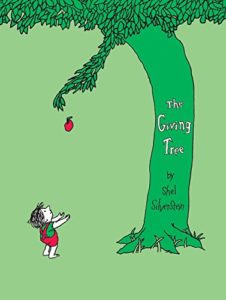
Sad Puppies Review Books: The Giving Tree

giving treeTHE GIVING TREE

Reviewed by John Z. Upjohn, USMC (Aspired)

The so-called Social Justice Warriors always say they want strong female characters and realistic role models for women but they once again prove that SJWs always lie by ignoring this book, which provides the most complex, intricate, and yet startlingly true-to-life depictions of females of any book I have read or will ever read.

The Giving Tree is the story of a real man, a red pill-downing alpha male who knows the importance of maintaining frame and consistently demonstrating value to any tree he wants to fuck by being confident and taking what he wants, then leaving her alone so that she knows his time is valuable and that he is not to be trifled with. This pleases her because as a female tree it is her biological imperative to find a male with a high sexual value. It is so refreshing to finally see a believable depiction of a woman like this.

The tree supports her man through all his endeavors. Whether he is working hard to sell apples, harvest lumber, building a house, or cutting down the tree to make a boat to get away from the shrew of a wife and the children she no doubt conceived to entrap him into marriage, she leaves him alone to get on with the hard work and the sacrifices he makes to achieve his dreams.

As vivid a portrait of the female psyche as the tree paints, though, it is the man’s wife who steals the show. She is first deftly foreshadowed when the man shows up at the tree explaining to her his plans to build a house. Why does he need a house? So he can have a wife and a family. This is the moment when we know our hero has slipped into blue pill thinking. When he was a child, before our female-dominated society had filled him with its propaganda, he was happy doing nothing more than going from tree to tree and having his fun with each one, keeping many plates spinning in the air, but when he grew up he drank the Kool-Aid and believed he had to settle down with any woman wily enough to steal his sperm.

And the wife. The story brings her to life in nightmarish detail. Overbearing, emasculating, controlling, frigid, and ugly but with an inflated sense of her own value given to her by feminism and its lies. The book almost spends too much time and detail making you picture her, and his life with her. You can’t get away from her.

Or can you?

Because our hero turns it around. He realizes he’s had enough, and he goes his own way. He takes the red pill. With nothing but his own two hands and the sweat of his brow, he makes a boat out of the tree and he sails away and we never have to see his wife disgrace the page again.

As satisfying as his escape from the clutches of her tyranny is, it’s almost too little, too late to save the book. She had too much of a presence in the book to begin with. The story is not about her, it’s about him. Why did they have to interrupt the fascinating story of this man in order to focus on her?

The ending of the book is a complete letdown, when the man who had gone his own way before comes back and settles down with the used-up old stump of a tree. Why? A man of his proven sexual value should never have to settle for a woman his own age unless he wants to, at which point there’s no reason for him to not keep a dozen or more plates spinning because men of his value become even more rare with age. This is the point where the book goes from grounded, realistic depictions of female existence into a flight of pure fairy tale fantasy, and it is the point where I check out.

Using strong, fully-developed female characters with personalities deeper and realer than I assume most actual women have and a classic tale of red pill redemption to sucker the reader in and then deliver this ending is such a classic example of SJW-style entryism that Saul Alinsky himself might have penned it.

Two stars.


Note from Alexandra: If you enjoy my coverage of the Sad Puppies and related nonsense, satirical and otherwise, please help me get to WorldCon 74 in Kansas City. For every $150 I collect towards my goal of $1,800, I will write another piece similar to this one.

Sisters, Salt, Shoes: A Review of “Left Foot, Right”

When I woke up this morning, the only review I intended to write was another satirical take from the point of view of Sad Puppy blowhard John Z. Upjohn, USMC (Aspired). That’s sitting in a mostly-finished draft, as I try to work out the final flourish that will bring it home.

One of the things that happens to me when I go through a spiral of depression and close myself off is that I stop reading. I was sitting here thinking it would be nice to work on some poetry, and then I decided the first thing to do would be to feed my mind. So I picked a venue that was on my mind (Strange Horizons, because I missed their tea party this past weekend due to a distinct and troubling lack of time-turners in my life) and went to see what I’ve been missing recently.

Instead of opening their poetry page, I found myself clicking on a link near the top of the front page for a short story by Nalo Hopkinson, an author similarly on my mind from WisCon, and I then found myself reading it, and then, eventually, glad that I had, albeit let me tell you that there were more emotions along the way to that gladness. They were all good emotions, in the sense of being well-made, sturdy, and suited to their purpose, but they were not all happy ones.

The mental and emotional state in which I exist right now is one that my partner, Jack, has accurately described as “having more feelings than sleep”. This is either the best or worst place from which to read a story such as “Left Foot, Right“. This story seems to have originally (or at least, previously) been published in an anthology called Monstrous Affections, two years ago, but can be read for free at Strange Horizons.

Let me start by saying that the shortest way to bore me to tears is to tell me a story about something spiritual and transcendent and make it mundane, to focus on what I call the “scienterrific” details that power a haunting, animate the undead, or make magic work.

This story, thank goodness, does not do this.

Good fantasy and good horror should be rooted in the real world, sure, but not in quantum fluctuations or viruses or electromagnetic energy or other things that plainly exist in the real world but just as plainly do not, in the real world, actually work that way.

No, the grounding of a story that touches another world should be found at a more liminal point, a point where the physical, tangible world around us already intersects with the unseen, with things that do work that way. Things like: memories. Feelings. Trauma.

This is a story…

I do not write many reviews. I would like to write more of them. It is difficult to describe what this story is or what it does without committing the sin of simply telling you what happens in it, stripped of context and robbed of emotion. A story is never simply the sum of the events within it, though. A story is not just what happens, it is the story of what happens, and you really have to experience it as intended to get the full effect.

This is a story about loss and regret and guilt and shame and trauma, and letting go, which is to say that it is a ghost story. That’s a bit reductive, of course, but most labels are. All stories are products of a time and place, and of those who tell them, both within the story and without. This is a story that is not concerned with the logic of the dead, but the logic of the survivor, of the living. I’ve often heard it said that funerals are for the living, for those left behind. I have never before considered that ghost stories might be, too.

The realness of the story’s depiction of emotional damage leaps off the page in the opening scene, with phrases like “before her world fell in” and “when she needs to fake normal”. If you’ve been there, you know. If you haven’t, you might be lucky enough to learn from a story from this before you find out some other way.

From that initial scene, the tale unfolds in a structure that will be familiar to many TV viewers: we see scenes from a life that contain haunting hints of something, things that trigger memories within the viewpoint character, which bit by bit, fill in the blanks until finally we have something like the whole story, just in time to make a kind of sense of what we’re seeing at the end.

Not everything is explained; certainly nothing of the supernatural is explained away, nor does it need to be. There are elements for which I no doubt lack the necessary cultural background to understand the significance of, but the story of what is happening still makes perfect sense even to me as an outsider invited to look in. It all fits together. It all comes to bear.

The looping structure of the story is hardly unique to the screen, but it is one of which the screen is that much more forgiving. It is hard to pull this off well in text. You either must be able to move fluidly from present-detail to past-memory, stepping backward and forward through moments in time with a deft, purposeful touch, or you have to use the literary equivalent of jump cuts, interrupting your prose with rows of asterisks or an extra line break. The latter is a serviceable solution to translating this form of nonlinear (or maybe superlinear) storytelling; the former is more satisfying when it works, but less likely to do so.

Nalo Hopkinson takes the former tack, and succeeds so beautifully I’m not sure it was the more difficult approach. I believe this is because she understands that this sort of storytelling is not exactly nonlinear, as I suggested in the previous paragraph. There is a line, a constant thread, running from moment to moment. While we are riding along with her viewpoint character, we follow that thread as she does. We learn of events that happened before, but we do not see them in flashback; we experience them in the present as the character experiences them. We learn of what she has gone through the way we might, if we could know her in real life: bit by bit, and only by hints and inference at first.

If you think about a richly layered musical piece that starts with a single voice, a single instrument, quiet and plaintive but hitting a few piercing notes, which weaves a theme that is then echoed and layered over by other voices, as motifs are woven in and it builds to a crashing crescendo and then the song recedes, and we’re left again with the quiet stillness of the opening movement, albeit transformed by what has happened along the way… if you think about that, if you have ever experienced something like that, then you will have an emotional picture in your head of the way this story unfolds.

This story is published in both text and audio form, with a play button embedded near the top of the page. I read the prose version so that I could follow the looping thread of the story at my own pace, soar and swell and unfold and spiral downward and inward and outward with it. I did not regret it. My mind rebels at listening to a story when it could be reading it. Other readers may find it useful to indulge themselves in the audio version, though, to not just read the story but hear it told, as I think that the aural medium might well serve it best for many audience members.

STATUS: Thursday, June 2nd

The Daily Report


Well, yesterday’s schedule was complicated because of post-con stuff and the fact that I decided to kick things into high gear around here on what turned out to be my first day back. To focus on the positive: I did update Tales of MU at a time when it was still Wednesday, June 1st in most of the United States?

I like the chapter. I think the start of the new book is a good introduction for new readers. I’m excited about it and the story and the world and the characters in a way that hasn’t happened organically in a long time. Through the auspice of Patreon, I also know that I’m getting paid ~$39 for it, which should come to me at the start of next month. That’s about a penny a word, which isn’t great, but having that much more of a direct connection between writing and getting paid does wonders for the motivation.

Financial Outlook

Not bad for now. It’s weird to come back from WisCon with some padding rather than a deficit. I’m really curious to see how the Tales of MU Patreon does when I’m getting more updates up. Best case scenario: it goes up. Long term, I’m going to need more sponsorship per chapter to keep going. I really hope to have $50 a chapter by the end of the month and grow from there. I think that’s doable, especially as I get back to focusing on the kinds of stories I want to read, which are the stories I’m best at writing and the ones that resonate the most powerfully with others.

The State of the Me

While I had my best post-con day yesterday, con living caught up with me unexpectedly when I absentmindedly drank two caffeinated sodas and a coffee with dinner. I stopped drinking caffeine past the early afternoon quite a while ago, but that habit goes out the window at con time. So I was up until something like 4:45 in the morning, and am fairly tired right now.

Plans For Today

I have a good start on a draft of a Sad Puppies Review Books, and I’m reaching out to a couple of people regarding collaboration opportunities. I’d like to get a few blog posts up, but I also might wind up taking a nap in the afternoon.

WorldCon plans.

So, until about two weeks ago, the notion of me attending WorldCon in August, when it’s hosted by Mid AmeriCon II in Kansas City, was a pretty distant dream. This weekend, I made tentative plans to attend WorldCon 75 in 2017, when it will be in Helsinki. This possibility was not even on my radar, to the extent that I told one of the chairs of WorldCon 75 that I had supported the Helsinki bid, even though there was a close to 0 percent chance that I could make it there. This turned out to be the most awkward thing I could have said at that moment, because it turned out she had approached me to extend a personal invitation for me to be there.

Now, before certain conspiratorial tongues begin wagging, let me explain a few things about how this works in the real world. When I say that she invited me personally, I mean that she said to me, as a person, “You should totally come!”, a statement which grants me no perks or privileges beyond those of any individual who is aware of the con and its attendance policies. When I say I was invited, what I mean is I was invited to purchase transportation to Finland, membership in the convention, and food and lodging while I am there.

I say this not to shame her for expecting me to pay my own way, but because I am an adult human being who understands how things work in the real world. The chair of a convention has very little power and very much responsibility. She cannot waive the con’s fees that pay for its existence and operation. She cannot access some bottomless pool of money to pay for things beyond the con’s control, like airfare. A literary sf/f con does not have the budget of a big media con, and even big media cons wouldn’t last if they paid for the appearance of people who do not bring in even more money for the convention in return.

Yet there are people out there who don’t know how the world works, but who imagine they do, and who imagine that these affairs are endless circles of cliquish nepotism where insiders pay each other to travel and lounge around and speak as experts. Two years ago there was a trumped-up tempest in a teapot “outrage” where people who had barely heard of me and only just heard of WisCon believed I was being paid to fly in and speak about “Social Justice” because I was on a panel about internet culture. This year someone interpreted my announced plans to be at World Con to mean that I was likewise a paid guest, and that’s the charitable interpretation where that rumor didn’t start as a deliberate lie.

Now, I want to mention the fact that a chair of World Con 75 personally invited me to fly out to Helsinki and participate because, heck, let’s face it… that’s pretty cool, isn’t it? She told me, in so many words, “You’re part of this. You’re part of this world, part of the community. You’re the real deal. You belong here.” That’s cool.  Now, I don’t mean to suggest that the chair of a WorldCon has the authority to act as gatekeeper for who belongs in sf/f fandom, because she doesn’t. The chair of a convention basically only has the authority to throw a convention, and that only just barely. But anybody has the power to give another human being validation, and I got some from a person who is helping to head up the 75th World Science Fiction Conviction in Helsinki in 2017, and that’s something worth mentioning.

It’s just a shame that I can’t mention it without translating for those who fevered imaginations have overcome their grip on reality. Just you watch, come next year or even as soon as WorldCon 74 is over and I begin firming up my plans for 75, there will rumors swirling about what I’m being paid or what’s being paid for. I’d give even odds that someone even links to this post with a claim that if you “read between the lines” it says this, or there’s a “clear implication” it says that… I mean, we’re talking about the people who took David Gerrold’s ironclad (and very proper) insistence that all nominees and winners would be accorded all decorum and respect at the WisCon 73 Hugo ceremony last year as an open promise to do the opposite.

This is probably the last time I’ll bother qualifying something neat like “a WorldCon head personally told me she’d be jazzed if I were there” by explaining the real world to dedicated denizens of a carefully constructed artificial reality, for the simple reason that I know it doesn’t work. It’s more my fascination with the disconnect between actual reality on the ground and the stories that swirl based on a few glimmers of that reality and much speculation that prompts this post.

What a different world we live in than the one that is ascribed to us.

An observation.

I used to have a lot of stress whenever I would notice two of my friends didn’t get along. I’d start wondering which of them I should be supporting, what each of them would think when/if they saw me retweeting/reblogging or talking to the other, stuff like that.

I’d see people about the internet get in these huge blow-ups around this kind of thing, and when I was younger I was certainly friends with people who would actively divide any community in which they entered into sides labeled “with me” and “against me”. Without putting it into words, I had internalized the notion that this is a thing that happens, that it’s part of the nature of friendship.

I recently came to a stunning realization that changed how I see the world and my place in it, though: I’m not friends with anyone who thinks this way. I actually have friends—good friends, very good friends—who have bent over backwards to avoid even the appearance of telling me who I can be friends with, who have kept their grievances against other people quiet around me out of deference for my friendship.

And the thing is, there have been cases where learning about the way one person I call friend treated other people (sometimes but not always other people I called friend) did change how I felt about that person to the point that it cooled or ended the friendship. But that’s me making the free choice about how my time and energy and affection are spent, not someone leaning on me to make me pick a side.

At WisCon this year, I spoke on a panel geared at “social justice newbies” about curbing the desire to pick a side and saddle up and ride when you see a conflict. Which is not to say don’t have principles or don’t stand by them, it’s simply to say: resist the temptation to reduce a situation to a battle between sides. I wasn’t thinking of this at all in terms of interpersonal relationships, but it’s there, too. Just because two people appear to be in opposition doesn’t mean it’s a battle and it doesn’t mean they need an army. They might just be two friends who have a difference of opinion or  a lot of feelings or even a friend who wronged a friend and who needs to make it right… but in that last case, what probably needs to happen first is for them to back away and get out of a defensive head space and the last thing they need is for someone to come along and join in just when it’s all dying down.

Or they might be enemies. They might have a deep philosophical difference that can’t be bridged. One or both of them might have wronged the other so badly they can’t possibly get along.

But if they’re not asking you to take sides, they probably don’t want you to and they certainly don’t need you to.

Nothing here against people who do ask for support when they’re having difficulty with another individual. Nothing here against people who point out that when you prioritize making someone’s abuser or attacker feel welcome in a shared/public space, you make them unwelcome and the space unsafe. Nothing here at all against the idea of making a stand or being choosy about with whom you associate based on how they treat others.

But, man… letting go of the idea that the world is made up of sides and the only way to interact with a situation is to pick one is just so terribly freeing.

STATUS: Wednesday, June 1st

The Daily Report

Well, as frequently happens this time of year, I just got back from my best WisCon ever. I felt weird initially, as it felt like something was subtly off about the con or the reception I received there. It wasn’t hostile, wasn’t even unfriendly, just different in a way that initially registered to me as colder. When it settled into me what had changed, though, I realized it wasn’t a bad thing: I wasn’t giving off any “lost/newbie/overwhelmed” signals so no one was coming to my rescue or acting to put me at my ease. Because I didn’t need any such attention, I didn’t miss it, but because it had always been a part of my initial con experience each year, I did notice a difference.

As soon as I realized what that difference was, I made a point to pay things forward. I looked for people who looked lost. I listened for questions in crowded hallways. I broadcast on Twitter when we would be going to the pool so that other congoers would know 1) there is a pool, 2) they wouldn’t be the only con folks there if they went, and 3) they wouldn’t be the only trans and/or queer people in the pool, if applicable. I made a point to make myself available to people who felt alone or unsafe. I think in doing so I made at least one really good friend of someone I was only sort of tangentially in generalized internet/fandom contact with before.

When I lay it all out like that in paragraph form, it sounds like a job in the sense of a thankless chore, and while it is certainly labor that takes time and energy (and labor that is worth valuing as labor), it’s not a matter of “I did this instead of enjoying the con and hanging out with people”. It was the structure by which I spent some of my time enjoying the con and hanging out with people.

Because I saw this con from a very different perspective than previous ones, I also came from it with what I feel is a better understanding about certain dynamics. I will write a bigger blog post about this in more detail in the near future, but the short version is that I’ve realized the merit of doing fan events in giving people who admire and enjoy one’s work a context and framework in which they know that stepping forward and interacting with you is not just acceptable but welcome.

So that coupled with the knowledge (pointed out by Jack) that next summer is the 10th anniversary of Tales of MU’s launch led me to an off-the-cuff Twitter announcement: next year, at WisCon 41, I will be hosting a 10th birthday party for Tales of MU. Or maybe a 10 year class reunion. I don’t know. We have a year to sort that out, and if you’re a MU reader and/or a fan of mine who has been interested in coming to WisCon and/or meeting me, you have a year to plan your trip. WisCon always takes place on Memorial Day weekend, always in beautiful downtown Madison, Wisconsin, and is always is held at the Madison Concourse Hotel (so if you’re early enough in reserving your room that you can get one in the main hotel, you do not have to worry about travel logistics or going outside to get to the main con events).

Economic Outlook

Pretty good! I had really been hoping my Patreon would blow up before the end of the month in a way that it didn’t, but my WorldCon fund did in a way that I really didn’t think it would. I have everything except for the hotel taken care of, will be buying memberships as soon as funds clear.

I do have to unexpectedly buy a new bluetooth keyboard, as my old one died during the con. That’s a minor expenditure.

The State of the Me

You know, when I announced that I was going to get Tales of MU running on a multi-update basis again on June 1st and when I decided I was going to start all these cool new things in June, I was under a mistaken impression about the distance between the con and the end of May. I was figuring that would give me a bit under a week of recovery time and padding between the end of the con and when I needed to kick things into high gear. I’m not sure from where I got that impression, but I had it, and it was wrong.

Turns out that’s okay. Despite having come back to a house that was swelteringly hot and has very little of the sort of food that I need to be eating, despite having had a fairly restless night, today, the day after I got home, I am feeling pretty good. This is my best post-con day ever. Mentally and physically. I can feel the touches of fatigue, but I’m not exhausted, there’s not all-encompassing cognitive fog, I haven’t forgotten all my big plans and dreams, and I’m ready to go on putting them in order. I’m a little unfocused, insofar as I wrote most the daily report section of this post then got caught up in household-organizational stuff (putting things back in order after almost a week with other people living here instead of us) and talking on the twitters about the free speeches.

Plans For Today

Okay. So. Today’s the beginning of the next book of Tales of MU. Big doings there in the afternoon. Between now and then, I’m going to be blogging a lot, though I’m not yet sure if it will be lots of small posts or fewer, bigger ones. I have a lot to say.

Walk Briskly (Short Story)

Well, it’s the last day of the month, and as promised I have had one story a day for the past eight days. The last story here is the newest one in terms of when it was conceived and written (if not when it was published), and one that’s both highly personal and important to me.

As you read, please remember the point of this exercise. I’ve been writing for a long time. I’d like to keep writing for a long time. But to write, I have to live, and to live I have to be able to eat and pay for pills and meet other expenses, and to that, I need your support on Patreon. I will be posting one new short story per month to my Patreon starting in June, so if you like what you read here, that’s the best way to get more.


WALK BRISKLY

By Alexandra Erin


The funeral home is very old, old enough that it still has an old-style chapel. That’s where we’re holding what is still called the viewing.

The podium on which sits the now-traditional portfolio album is situated in the middle of a recessed nook that was obviously designed to hold something a bit larger than a person in repose, and which now holds something a bit smaller than the average end table.

I’m being a bit clinical about it all partly because I wish to remain detached from the scene, and partly because I am detached, whether I want to be or not.

The jungle of flowers flanking the photo display do nothing to disguise how small it is. They swallow it up.

From a certain angle, it looks like my mother’s unnaturally youthful face is peering at me from out of a monstrous hybrid rose bush. It is not a pleasant or comfortable idea, all things considered.

I turn away. It’s not easy to detach myself from that image.

My grandmother isn’t any happier with the state of things. She handled the arrangements. She picked the funeral home. It apparently has some history that I don’t remember with her side of our family.

I wonder how many times has she been here, before? How many times after? How long would it take a person to get used to a change of that magnitude? I don’t know. The world I live in is the only one I’ve ever known.

My uncles have been trying to keep my grandmother calm for a good twenty minutes. Their results have varied.

“But I just wish I had another chance to see her,” she is saying when I tune in. “Would that really be so much?”

“Ma, the law’s the law,” my Uncle Mike says.

“It wouldn’t be her anyway,” Uncle Jeff says. “You know a body’s just a body. Anyway, is that how you want to remember her? The pictures are better.”

“The pictures are pictures!” Grandmother yells. “She’s my only daughter!”

“Geez, quiet down, Ma,” Mike says. “People are gonna…”

“People know she’s grieving,” Jeff says. “That’s what this is. Grief. It’s okay. Ma, you know it would break her heart if she knew you took that kind of risk. You know how careful she was all the time.”

“You mean she was afraid all the time,” Mike says. “And she wasn’t happy if everyone else wasn’t.”

That’s when I turn away.

* * * * * * * * * *

“Walk!”

This is what she’d yell whenever I was heading out the door. It didn’t matter where in the house she was, or whether I’d told her I was going out. She’d sense the front door opening, zip to the nearest doorway to the front hall, and yell out the reminder.

“I know,” I’d call back over my shoulder.

“Don’t run!”

“I KNOW!”

I did know. Everybody knew. Just like, sometimes, everybody ran, because no matter how brave we all acted around the schoolyard, we still got scared a bit at a rustling in the ditches or saw something staring eyelessly out of a hedge.

There was no need to run. None of them could. Most of them could barely walk. But at the same time, there was no real reason not to run. The point was to get away, right? Running was safer than walking. As for the risks…

“That’s how you trip,” my mother would say.

“But I’m still faster even if I trip,” I said back to her, once. “If they’re not close enough to grab me when I start running, they’re not going to be any closer when I fall!”

“The one you know about won’t be,” she said. “They hunt in packs, remember?”

“Mother!” I said. “There haven’t been packs for years!”

“There are occasional packs still,” she said. “It doesn’t even have to be a pack. It could just be two of them, the one you see and the one you don’t. Anyway, it really only takes one. What if you trip and twist your ankle? What if you break your leg?”

“I’ll still drag myself faster than it can,” I said.

“Oh? Have you ever had a broken leg? Remember when you broke your finger? You almost blacked out.”

“I could still trip if I’m walking.”

“But it’s all about odds,” she said. “It’s all about risk. When you’re running, you can’t keep your eyes on the ground. You don’t have as much time to react when something comes up. You can’t stop yourself if your foot snags on something. And what happens if you wind up running right into a dead end?”

“We don’t live in a labyrinth,” I said. It was a new word to me at that point, and I was very proud of it. Probably a bit too proud, or else I wouldn’t have dared to say that, as sure of myself as I was.

I don’t remember exactly what my mother said in response to that. I do remember I was less proud of my vocabulary afterwards.

I never argued with her about that again. I still didn’t think she was right about running. If it was about odds, then who was to say that it wasn’t riskier to spend more time in the area? If there might be more than one, then wouldn’t it be better to get out of there before they could surround me?

But even if I didn’t think running was as dangerous as she made it out to be, I recognized that there was a different kind of danger in pushing her too far.

In all honesty, the danger posed by the amblers was distant and abstract compared to the danger posed by pressing my mother’s buttons. I had no experience with being dragged down by an ambulatory corpse, but I had been grounded.

Anyway, the debate about running had only been a side point in an older, longer-running argument about the way to deal with things like amblers in the first place.

* * * * * * * * * *

“Hey there, Safety Tip,” my cousin Brian says.

“I’ve asked you not to call me that,” I say.

“Ah, hell,” he says. “I’ve been calling you that for years. Everybody in school did! What else am I supposed to call you?”

“My name. Anything else. Just don’t call me that today.”

“What’s so special about today?”

I stare at him. I know he’s making fun of me, but I can’t tell if this is part of the tease or not. I don’t know which would be crueler.

“My mother is dead,” I say. It’s all I can do to get the words out. I expect them to come tumbling from my mouth in a rising roar, but when I hear my voice, it is tiny, thin, and piercing. I want my words to push him away, but I can see on his face he doesn’t even feel it.

I turn and walk briskly away.

* * * * * * * * * *

My mother always did love her safety tips.

Look both ways before crossing the street. Don’t go in the water for a half hour after eating. Stop, drop, and roll if you catch on fire. Stop, look, and listen when you get to the train tracks.

Her favorite, of course, was the famous WALK.

Every time she shouted “walk” to me as I was heading out the door, I knew she didn’t just mean “walk” but “WALK”. I knew this because for the longest time, she would give me the whole spiel before letting me go out alone:

Walk briskly, stay Alert, keep your eyes Low, and Know the area.

That’s what you did if you encountered an ambler. That’s what you were supposed to do, anyway. Don’t approach. Don’t engage. Don’t stop and watch it stumble around towards you. Don’t laugh at it, no matter how helpless and harmless it looks. Don’t stop and take a picture of it. Definitely don’t try to get a picture with it.

Almost everyone else in my class had a picture of themselves with an ambler in the background. Polaroids, mostly, because they didn’t have to be developed. The kids who had actual film photographs were the coolest kids with the coolest parents, the ones who would let them have everything and let them do anything.

Justin Peterson was one of those kids. He had a picture with his arm around one, though it was dead. I mean, it had been rendered inert again. He’d shot it between the eyes and then propped it up for a picture, which his dad took.

He’d been a hero to the whole school, once.

For a while, everyone had wanted to be him.

* * * * * * * * * *

“I’m told your mother died peacefully,” a blonde woman wearing a red pillbox hat with a veil of netting on it tells me. “And that she passed without incident.”

“Yeah,” I say.

I’ve been told that, too.

Everybody keeps telling me that. They clasp my hand in theirs, give me firm, unblinking eye contact, and tell me the news that I had been given long before them: my mother’s body went into the crematorium peacefully and still.

Why do they tell you this? Why do they think you need to know? Dead is dead, even now, or at least gone is gone. My mother is every bit as gone as if something had tried to beat and claw its way out of the box.

Anyway, what do they tell the people whose loved ones did turn unexpectedly? If it’s supposed to bring peace to know that it didn’t happen, what do they tell the family when it does happen? Nothing?

Then I know, with a certainty: they passed without incident. Like an angel. Like a sleeping angel.

Of course they do.

“What a blessing!” the pillbox lady says.

“Yeah,” I agree.

“I had nightmares about my Albert, before he went into the fire,” she continues. My eyes dart around the room looking for an escape, but I know I’ll find none. I came to this corner to escape. It seemed like the last safe place for me to stand. “They tell me that they can’t feel anything, that it’s not really them anymore, but what if they’re wrong? What if they’re wrong? They still don’t know why it happens, and I mean, people used to think cows don’t feel anything. We don’t really know anything, do we?”

“No, we don’t,” I agree.

* * * * * * * * * *

The first thing I asked for when my mother said I was old enough to go out by myself was a sword. Sherry Morgan had one that she said was Japanese. Her grandfather had brought it back from the war, she said, and now it was hers. Everybody thought it was the coolest.

I liked it because I thought its curved, single-edged blade would impress my mother. What could be safer than that?

“Don’t be silly,” she said. “What good is a sword for?”

“Sherry says it can cut right through bone and everything,” I said.

“What sounds safe about that?” she said.

“Mom, it’s not even sharp like a razor,” I said. “You have to, you know, swing it. Hard.”

“Then it’s not going to do you much good at your age, is it?” she said. “Anyway, you don’t have any reason to cut one up. All that’s good for is getting seven kinds of yuck on you, and it doesn’t even stop them.”

“I could cut off its arms and legs and then go for the head,” I said. “Sherry Morgan says she’s killed lots of them.”

“You don’t kill an ambler, sweetie,” my mother said. “They aren’t alive.”

“They’re kind of alive?” I said. “Mr. Grossman says they’re undead.”

“That is superstition,” she said. “They’re just… a thing that happens. Like a storm, or an avalanche, or a sickness. And speaking of sickness, the last thing you want to do is smack into them with a sword. Who knows what germs you’ll splatter yourself with?”

“Mom, you can’t catch it,” I said.

“That’s what they say, but no one knows what causes it,” she said. “And even if you can’t, you can catch other things. A rotting body is a perfect incubator for disease.”

“I’d be careful!” I said.

“Showing off with a sword is the opposite of careful,” she said. “I’ll get you something you can use to keep them off of you and get away. That’s the goal. Just get away.”

When she told me she’d get me a pike instead, I hadn’t known what she meant. Looking it up in the school library, I’d found pictures of wicked looking medieval weapons that looked like a spear had a baby with an axe. It wasn’t a shotgun. It wasn’t a handgun. It wasn’t a chainsaw. It wasn’t a sword. It wasn’t any of the things that I’d ever wished for, but I didn’t care. That just meant no one I knew had anything like it.

It meant that for once, I was going to be the cool kid.

When she actually brought it home, I was horrified. It was nothing like the pictures from the book. It reminded me of a whaler’s harpoon, or at least what I imagined one would look like, only the end of it wasn’t pointed or hooked at all. It was just a broad, flat metal thing, kind of like a boat oar. The patented safety tip, the package had called it.

My mother had loved her safety tips.

“If the goal’s to get away, why not just get me a sword?” I said. “At least then I could run away!”

I knew the words were a mistake as soon as I’d said them, but it was too late to take them back and I didn’t have the speed or eloquence needed to explain that I’d meant it in the sense of retreating, sensibly, at a safe speed.

“Don’t. You. Dare.”

I think I knew then and there that my fate was sealed, that I’d be stuck with the pike forever.

“I didn’t mean it like that,” I said.

“You don’t run from them. If you see them, you walk away from them. Walk briskly. The pike is only when one gets in your way, when one lurches around a corner or sneaks up on you.”

“How are they going to sneak up on me? Everyone says they barely know we’re here anymore. You practically have to step on one to get bitten.”

“Those are the old ones,” she said. “New ones pop up all the time, and they’re still a bit quicker, and they have better senses.”

“They still can’t exactly sneak,” I protested. “They’re not smart like that.”

“No, but they’re very quiet and they’re very patient,” she said. “Anyway, if you’re so sure they can’t get close, then why do you care if you have a sword or pike? You shouldn’t need to use it very often.”

“Then can I just leave it at home?”

“You were the one who wanted a way to defend yourself.”

“I wanted a weapon!” I said. “I want to fight them!”

“There’s nothing to fight! They aren’t exciting. They aren’t enemies to defeat. They’re just something to avoid when we can, and deal with when we can’t. That’s what you have to do.”

* * * * * * * * * *

They call what happens next the remembrance, though I know I won’t remember any of it.

While her brothers and co-workers get up and talk about the kind of person they think she was, I’m looking at my mother’s face in the big round oval frame that dominates the display. The pictures were chosen from all times of her life.

The biggest one is the one that I guess people thought best represented her. It wouldn’t have been my choice, and not just because I have a hard time remembering when she ever looked that young. Her cheeks are too rosy. Her lipstick waxy-thick. I know she looks happy, but I also know what she looked like when she was happy.

I don’t know what a corpse looked like, lying in a coffin with its face made up by a mortician and fixed into the best approximation of a relaxed expression that can be wrung from a corpse. I’ve read old books, though, where people talk about how such faces are unfamiliar, artificial.

I feel that way looking at the picture of my mother. I couldn’t guess the context from which the portrait was cropped. The background is an almost white sky. She’s smiling for the camera, with no idea that this forced, fixed expression is going to be her death mask.

* * * * * * * * * *

“Take your pike if you’re going out,” my mother said when she saw I was heading for the door without it.

“They just did a sweep yesterday,” I said.

“And they always miss one,” she said. “Watch the news and you’ll see. The day after a sweep is always when someone gets taken. Because it makes people careless, you see. Someone always dies after a sweep.”

“They do a sweep every month,” I said. “If someone died every time…”

“Oh, for heaven’s sake, I don’t mean here. But somewhere. Anywhere. It could be here. Take your pike.”

I sighed and lifted the long, unwieldy pole off its wall mounting.

“If you want to keep me safe from amblers, you should have got me a gun,” I said. I thought my logic was foolproof. “It’s got a lot longer reach than a big, heavy stick.”

“Are you kidding?” she said. “A gun is way more dangerous than an ambler.”

“Isn’t that the point?” I said.

“Do you know how many people get shot every day by accident? Do you know how many people a day shoot themselves?”

Probably not even one, I thought. It couldn’t happen that often or people wouldn’t make guns. I did know that I was on a losing track.

“I don’t even know how I’m supposed to kill an ambler with this thing,” I said instead.

“You aren’t supposed to kill them,” she said. “First, they’re already dead. Second, that’s why we have patrols. You’re supposed to get away from them. If one’s in your way, you push it back or you knock it down. Sweep…”

“Sweep the knees!” I said. “I know!”

“You get it down, and then you…”

“Then I walk away.”

* * * * * * * * * *

My name is called. I remember being told that I should probably say something, and I remember that I had said in response that I would like that. I hadn’t given it any more thought. That’s just what you do when your mother dies, right?

It’s never happened to me before and it would never happen again, but even an hour ago I couldn’t imagine that I wouldn’t want to stand up in front of a room of mixed family and strangers, that I wouldn’t have anything inside me to say to them.

* * * * * * * * * *

Justin Peterson got his throat torn out when I was fourteen. He’d been hunting in the woods, supposedly for deer but probably not really.

He turned.

There’s no rule that says getting killed by one always turns you into one, if there are any rules at all. It seems to happen more often that way, though. Some people think there is just a correlation between dying violently and alone and turning, but other people say that’s just anecdotal. They say it seems that way because people who died in accidents in the middle of nowhere never get cremated.

I don’t know.

I do know that the thing that had been his body stumbled onto the field during an outdoor day in gym class, I was the last one to know it had been him. I turned, and I walked briskly towards the school, taking the long way around the big sloping hill up to the parking lot, because I might slip. I heard my classmates’ laughter turn to screams and resisted the urge both to look back and to run.

Most of them were okay, physically. They were screaming because they recognized who it had been. Some of the jocks tried to tackle it and bash its brains in. One of them got a bad bite on his arm. He needed stitches and antibiotics, but he lived. His reputation did a 180 overnight, though. No one ever quite believed that it wasn’t infectious. He went from being one of the coolest kids in school to a total pariah.

It wasn’t just that the other kids were afraid of him. He’d get knocked down in the hall, have things thrown at his head. People would shuffle past him, moaning in the way that amblers never moan but people always act like they do.

I didn’t understand it. I still don’t. Everyone acted like at any moment he might turn into a monster and kill us all, but they didn’t act like he was a threat. They acted like he was weak. I asked my mother about it, not because she’d understand but because I didn’t have anyone else to ask.

“Fear does that to people sometimes,” she said. “It brings out the worst in people. That’s part of why it’s so important not to be afraid.”

“You don’t act like that.”

“Sweetheart, that’s because I’m not afraid,” she said. “And I don’t want you to be afraid, either. I don’t want you to think you have to be afraid.”

“Then why do I have to carry a stupid pike around, if I’m not supposed to be afraid? Why do I have to know all the rules? And why are you always checking on me, always hassling me about them? Why all the stupid safety tips?”

“There are things we do when things are scary, so that we won’t be afraid,” she said. “It would be terrifying to go down the road at sixty miles an hour if there weren’t seat belts and brakes and signal lights and, and… safety features. We have all those things, and we have rules of the road, and because we can count on them to keep us safe, we don’t have to be afraid.”

“But people still die in car accidents, don’t they?”

“They do,” she said.

“And people still get killed by amblers.”

“Yes,” she said. “Yes, they do. They probably always will.”

“You are afraid!” I said. I’m not sure if I felt triumphant or terrified at catching her in this contradiction. “You said you’re not.”

“I don’t have to be,” she said. “Love, things—people—aren’t just one way or another. Sometimes I get scared when I’m driving, too! The important thing is that it doesn’t become all that I am, that the things I feel don’t overwhelm the things I know, like how to drive safely. The important thing is that you don’t panic.”

* * * * * * * * * *

“My mother,” I say, “always kept me safe.”

I know these words are inadequate. I know I should be explaining, elaborating… saying something about how she knew it was a scary world, and she didn’t hide that from me, but she always made sure I had the tools to deal with it.

I should be saying that “safe” didn’t mean I wouldn’t die, though I didn’t. It didn’t mean she didn’t worry every time I went out the door, but that she could let me go out the door.

None of these words will come, though. They won’t form up into ranks inside my head and I can’t make them march out of my mouth.

“She wasn’t afraid,” I say. “She taught me not to be afraid. I love her, and I miss her… and I’ll always miss her… but I still know I don’t have to be afraid.”

People are looking at me like they’re not sure if I’m finished. Have I said enough?

“That’s all I have to say,” I say. “There isn’t anything else…”

There’s some awkward, scattered clapping, which weirds me out because I didn’t expect it. Were people clapping at the other speakers? I get out from behind the lectern and head down the aisle. I don’t go back to my seat. I need air, but more than that, I need to be somewhere else, anywhere else, just as fast as I can safely get there.

I fumble out the claim ticket for the coat check and thrust it with shaking hands to the attendant, who peers at the scribbled scrawl underneath the description.

“It’s the pike,” I say. “Seven and a half feet long, with a safety tip.”

“Right,” he says. “I saw that in the corner. Hang on. You know, I didn’t know anyone still carries these. Sure, you could brain a thing hard with it, but it’s so awkward to swing. There’s got to be easier ways to take out an ambler.”

“I’m sure there are,” I say. “But I don’t have to take them out. I just have to get away.”

“Well, the threat level for tonight is elevated, so if you’re not looking to fight, you’d best be ready to run. Can I call you a cab?”

“No, thank you,” I say, sniffling. “I’ll walk. Briskly.”


Remember, folks… like this story, want more: support me. You won’t just be getting great fiction like these eight stories, you’ll be enabling my internet commentary, award-nominated science fiction and fantasy poetry, humor, game design, and everything else I do in any creative sphere in a month. That’s quite a lot of bang for your buck.

If you don’t have the cash to help, you can help by spreading awareness and joining my thunderclap, which will broadcast the link to these stories in a tweet-length message on the social media platform(s) of your choice on May 31st, two hours after the last story goes live.